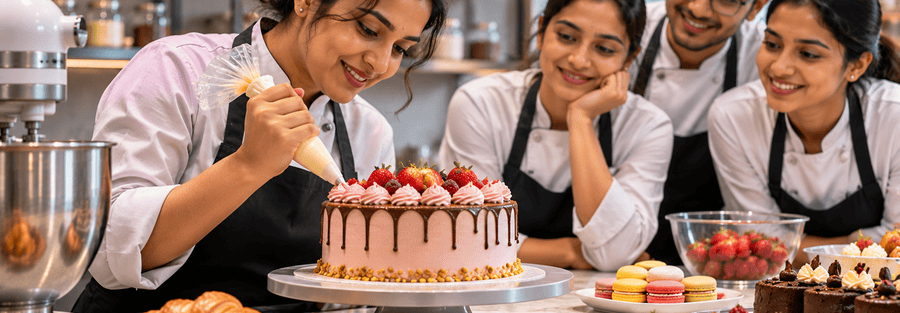
Pastry is a combination of precision, creativity and technique. From preparing laminated dough to creating refined desserts, professional baking requires more than simply following a recipe. Understanding ingredients, temperatures, methods and presentation can help learners develop skills that can be applied across different pastry products.
For anyone considering Pastry Courses in Mumbai, the choice of programme should depend on individual goals, existing experience and the type of baking skills they want to develop. A structured pastry programme can provide a more organised route for learning multiple techniques rather than relying entirely on self-practice.
CHO BEE LABS is a School of Pastry & Culinary Arts offering a range of pastry and baking education options, including its six-month Pastry Arts programme and specialised modules.
What Do Pastry Courses in Mumbai Teach?
Professional pastry education can cover a broad range of techniques. Students may progress from fundamental preparation skills to more specialised pastry work.
The CHO BEE LABS Pastry page currently lists modules including:
- Modern French Pastries
- Croissant & Puff Pastries
- French Petit Gateaux
- Entremets
- Plated Desserts
- Wedding & Celebration Cakes
- Master of Chocolates
- Pie & Tarts
- Tea & Travel Cakes
- Cookies
- Boulanger of Breads
- Ice Cream, Gelato & Sorbet
The programme also includes Food Science & HACCP, Entrepreneurship and Business SOPs, Sugar & Chocolate Display, and Assessment Awards & Certification.
This broad subject range can be useful for learners who want exposure to several areas of pastry rather than focusing on one product alone.
Why Consider Baking Courses in Mumbai?
Mumbai offers opportunities for people interested in professional baking, pastry production and food businesses. However, developing reliable technical skills requires practice and an understanding of how ingredients and processes work together.
Baking Courses in Mumbai can provide a structured learning environment where students can work through different topics systematically.
For example, understanding laminated dough is useful when preparing croissants and puff pastries, while knowledge of pastry composition and finishing can support work with modern desserts.
The value of a course therefore extends beyond learning individual recipes. It can help students understand techniques that can be adapted to different preparations.
Exploring Different Areas of Pastry
French Pastries
French pastry techniques require attention to detail, consistency and presentation. Learning these methods can introduce students to a more refined approach to pastry production.
Croissants and Puff Pastries
Laminated dough requires careful preparation and handling. Students can learn how layers are created and how technique affects the final product.
Cakes and Celebration Desserts
Cake and dessert production combines baking with finishing and presentation. Celebration cakes also introduce learners to decorative elements and specialised preparation.
Chocolate and Confectionery
Chocolate work involves its own techniques and precision. A dedicated chocolate module can allow students to explore this specialised area of pastry.
Breads and Frozen Desserts
Pastry education can extend beyond cakes and desserts. Bread, gelato, ice cream and sorbet can introduce additional preparation methods and product categories.
Choosing the Right Baking Classes in Mumbai
Not every learner has the same objective. Someone interested in professional pastry work may need a broader programme, while a home baker may prefer a specialised class.
Before choosing Baking Classes in Mumbai, consider the following:
Your Experience Level
Beginners may benefit from structured instruction that introduces fundamental techniques. More experienced bakers may prefer advanced or specialised topics.
Your Career Goal
If the objective is professional development, look for a programme that covers multiple areas of pastry production rather than only one recipe category.
Course Duration
Short masterclasses and longer programmes serve different purposes. A short course may be appropriate for learning one specific skill, while a longer programme can provide broader exposure.
Curriculum
Review the modules carefully. A diverse curriculum can help learners understand different areas of the pastry industry.
Learning Beyond Recipes
One of the most important aspects of pastry education is understanding why techniques work.
For instance, baking results can be influenced by ingredient ratios, temperature, preparation methods and timing. Developing this understanding allows students to troubleshoot problems and adjust their approach.
Professional pastry learning can also introduce students to food safety and kitchen practices. The CHO BEE LABS programme includes a Food Science & HACCP Module, alongside an Entrepreneurship and Business SOPs module.
These subjects can provide useful context for learners who are considering professional kitchen environments or future food-business opportunities.
Who Can Benefit From Pastry Training?
Pastry education can appeal to different types of learners. Beginners may want to build a foundation, while home bakers may want to improve their techniques.
It can also be relevant to aspiring pastry chefs, hospitality professionals and people considering a career change.
Those interested in entrepreneurship may also benefit from learning about the business side of food production. The CHO BEE LABS curriculum specifically lists entrepreneurship and business SOPs among its modules.
Making the Most of Baking Classes
Practical learning becomes more valuable when students continue practising outside scheduled sessions. Repeating techniques can improve consistency and help identify areas that require further attention.
Keeping notes about recipes, processes and results can also help learners track their development.
Rather than trying to master everything immediately, students can focus on building one skill at a time and gradually combining techniques.
Why a Broad Pastry Curriculum Can Be Useful
Pastry is a wide field. A learner who starts with cakes may eventually become interested in chocolate, breads, French pastries, plated desserts or frozen desserts.
A broad programme can provide an opportunity to explore these different areas before deciding which specialisation is most appealing.
CHO BEE LABS currently presents a six-month Pastry Arts programme alongside individual modules covering a wide selection of pastry disciplines.
Conclusion
Choosing the right Pastry Courses in Mumbai is about finding a programme that matches your learning goals and provides meaningful exposure to pastry techniques.
From French pastries and laminated doughs to cakes, chocolate, breads, gelato and plated desserts, a broad curriculum can help learners understand the variety within professional pastry.
Whether you are comparing Baking Courses in Mumbai or looking for practical Baking Classes in Mumbai, reviewing the curriculum, duration, learning format and intended outcomes can help you make a more informed decision.
If you want to explore pastry education in Mumbai, visit CHO BEE LABS to review the current Pastry Arts programme and its specialised modules.